

This event is all ages.
Stay tuned for more information!
Film format subject to change.
All doors & show times subject to change.
Add this event to your calendar:
Arab Film Festival
The flagship event of the Arab Film and Media Institute, the Arab Film Festival is the longest running independent festival of its kind in North America. This year we are celebrating our 30th anniversary!
Launched in 1996, the festival’s mission is to present the best of contemporary films that illuminate the richness of Arab culture through authentic narratives and images, providing insight into the beauty and complexity of the Arab world.
The festival also offers special programming to local audiences, and unprecedented access to the diversity and range of authentic Arab experiences. The festival has gained an international reputation for excellence and offers its audiences access to media that reflects the lives of under-represented and provocative themes and groups on a cultural and societal level.
The 30th edition of the Arab Film Festival will open on Thursday Nov. 5th at the AMC Kabuki 8 in San Francisco. The festival will run through Saturday Nov. 14th.
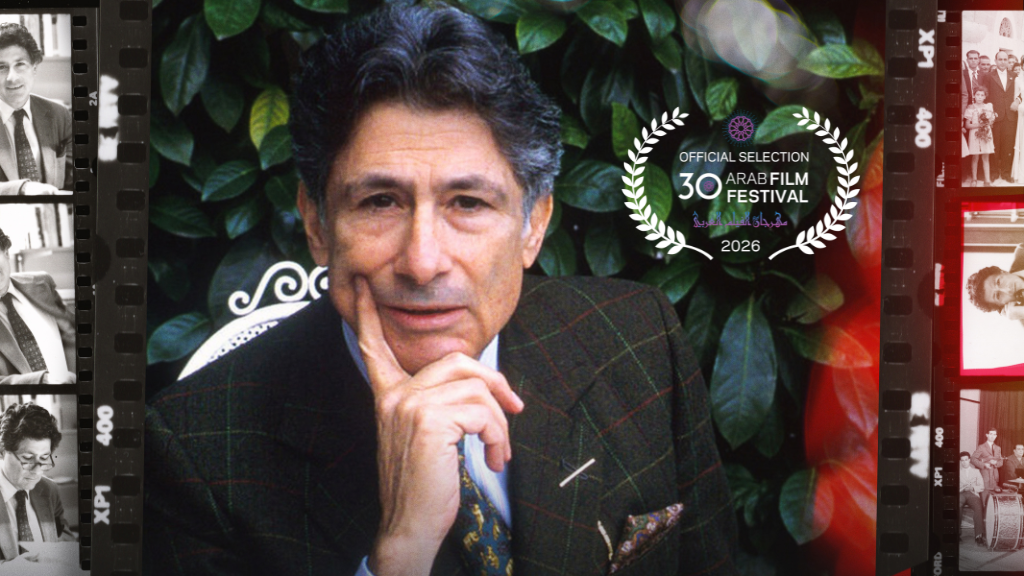
Edward Said: Between Worlds
Following AFMI’s early spotlight on the project at the 2025 Arab Film Festival, filmmaker Maiken Baird returns to AFF with the completed Edward Said: Between Worlds, an archival documentary examining the life, ideas, and enduring legacy of Palestinian-American scholar, author, and public intellectual Edward Said.
Told through archival material and Said’s own words, the film follows his journey from his childhood in Jerusalem and displacement in 1948 through his academic career at Columbia University and his emergence as one of the twentieth century’s most influential cultural critics and advocates for the Palestinian people.
Said’s landmark work Orientalism fundamentally changed how generations of scholars, artists, and cultural institutions understand the ways the Arab world has been represented by the West. Nearly five decades after the book’s publication, its questions about representation, cultural power, identity, and who gets to tell whose story remain deeply connected to AFMI’s own mission.
